
The short answer
For standing all day, look for an insole shape that suits your feet without crowding your shoes. Compare cushioning locations, arch profile and overall fit. A thicker or softer insole is not automatically the more comfortable choice.
Standing in one place or walking through a shift? Start there.
A cashier and a stockroom worker may both spend a shift on their feet, but their footwear needs can differ. Describe your day before shopping: mostly standing still, walking between tasks, working on a hard floor or wearing already snug shoes? That description is a more useful starting point than a product name alone.
Next, note what you want to compare: a cushioning area under the heel, room around your toes, an arch shape that feels too prominent or general end-of-shift discomfort. Those observations help narrow down a format. They do not identify a medical cause or establish which product will resolve pain.
The Canadian Centre for Occupational Health and Safety identifies prolonged standing, flooring and footwear as relevant to comfort at work. Think about insoles alongside your shoes and opportunities to change position, rather than treating an insert as the entire solution.
Four details to check before buying work insoles.
Start with the cushioning layout. An insert under the heel and a separate insert under the forefoot describe a different design from a small pad in one area. Product photos can show where those elements sit. They cannot demonstrate how the model will feel after an eight-hour shift or prove a clinical benefit.
The arch profile is the shape under the middle of the foot. More height is not automatically better. Compare the side view with the shape you are used to and the space inside your shoes. If you are unsure, ask for measurements or a closer view instead of choosing the strongest-sounding support claim.
Thickness matters as much as length. An insole can fit inside a shoe yet leave too little room over the foot. Check the instep, toe area and heel fit. If your usual lacing now feels tight or your heel sits differently, the combination deserves another look rather than simply buying a larger insole.
Finally, compare the outline and length. A full-length insole covers the shoe’s footbed; a partial insert covers less of it. Compare the heel width, forefoot width and length with the original removable footbed. The same labeled shoe size can fit differently across brands and footwear styles.
| Your priority | What to compare | What to avoid |
|---|---|---|
| Heel and forefoot contact | The location of cushioning inserts | Assuming a photo proves results |
| Shape under the arch | Side profile, outline and available space | Choosing the highest arch by default |
| Snug footwear | Thickness, width and heel fit | Stacking inserts without checking space |
| Protective work footwear | Manufacturer and workplace requirements | Assuming comfort insoles add certification |
FROM THE PODOLIS SELECTION
Three options to compare by construction.
These three models are part of our work-insole selection. They are not ranked by medical effectiveness or shift-length performance. The differences below describe visible product features and the details listed on their product pages. Start with the shape that makes sense for your footwear, then check the available size.
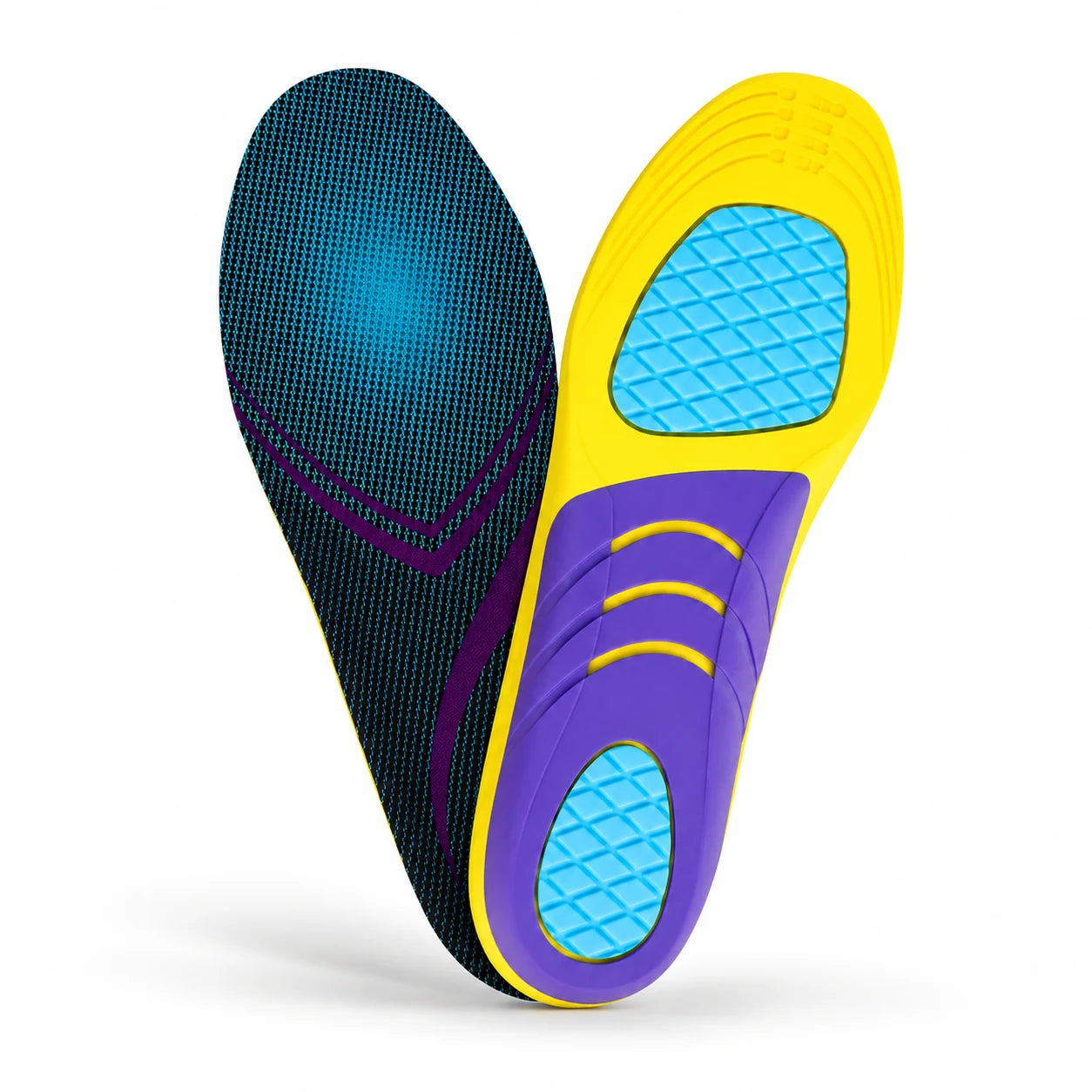
Everyday Comfort Insoles
A full-length option to examine if you want separate cushioning inserts at the heel and forefoot.
- Two distinct cushioning locations
- Contoured arch visible from the side
Check: arch shape and the room remaining inside your shoes.
Explore the features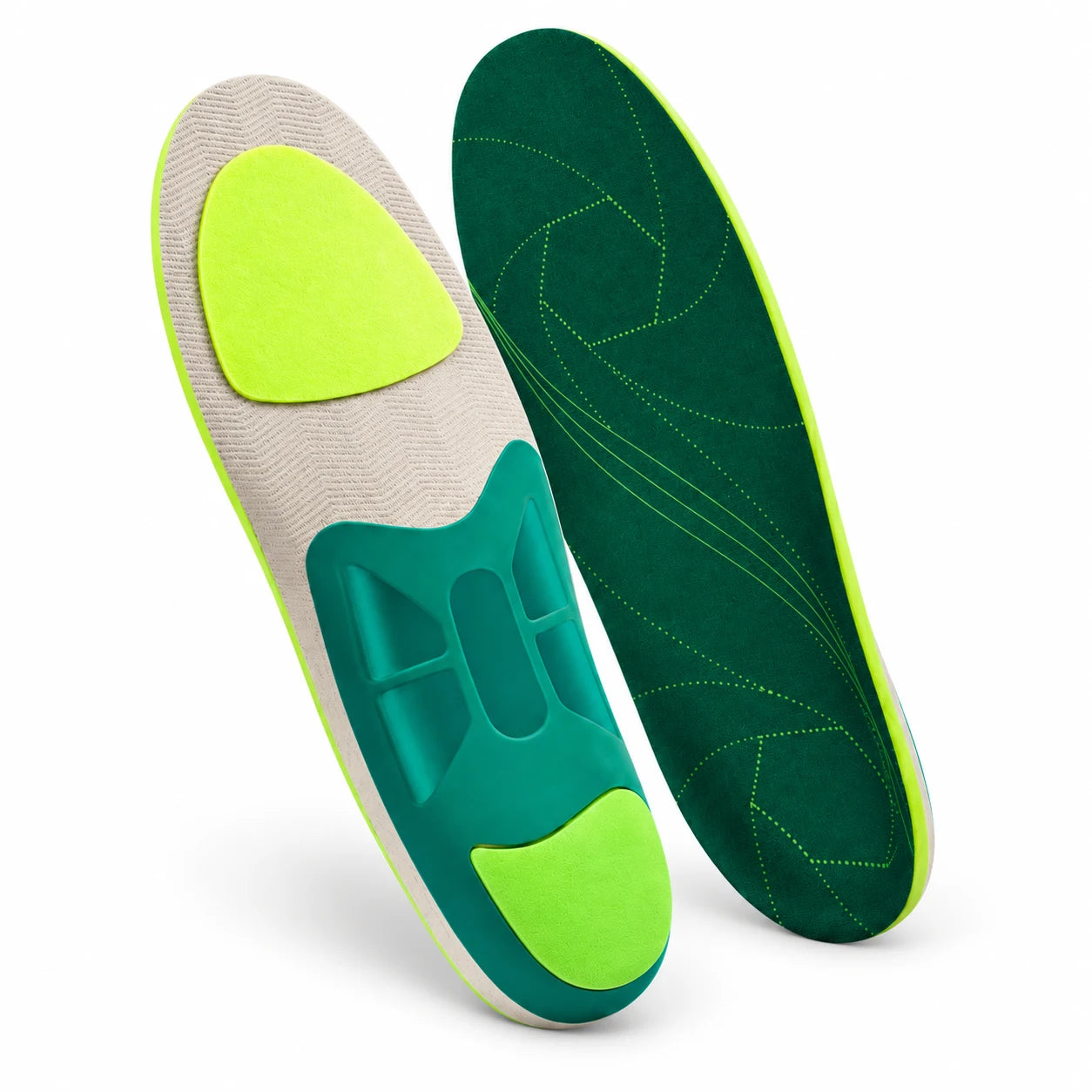
UltraComfort Insoles
Compare this design if you are looking for an arch shell and a cupped heel shape.
- Separate shell under the midfoot
- Heel and forefoot cushioning inserts
Check: whether the shell and heel shape fit your footwear.
Check the shape and sizing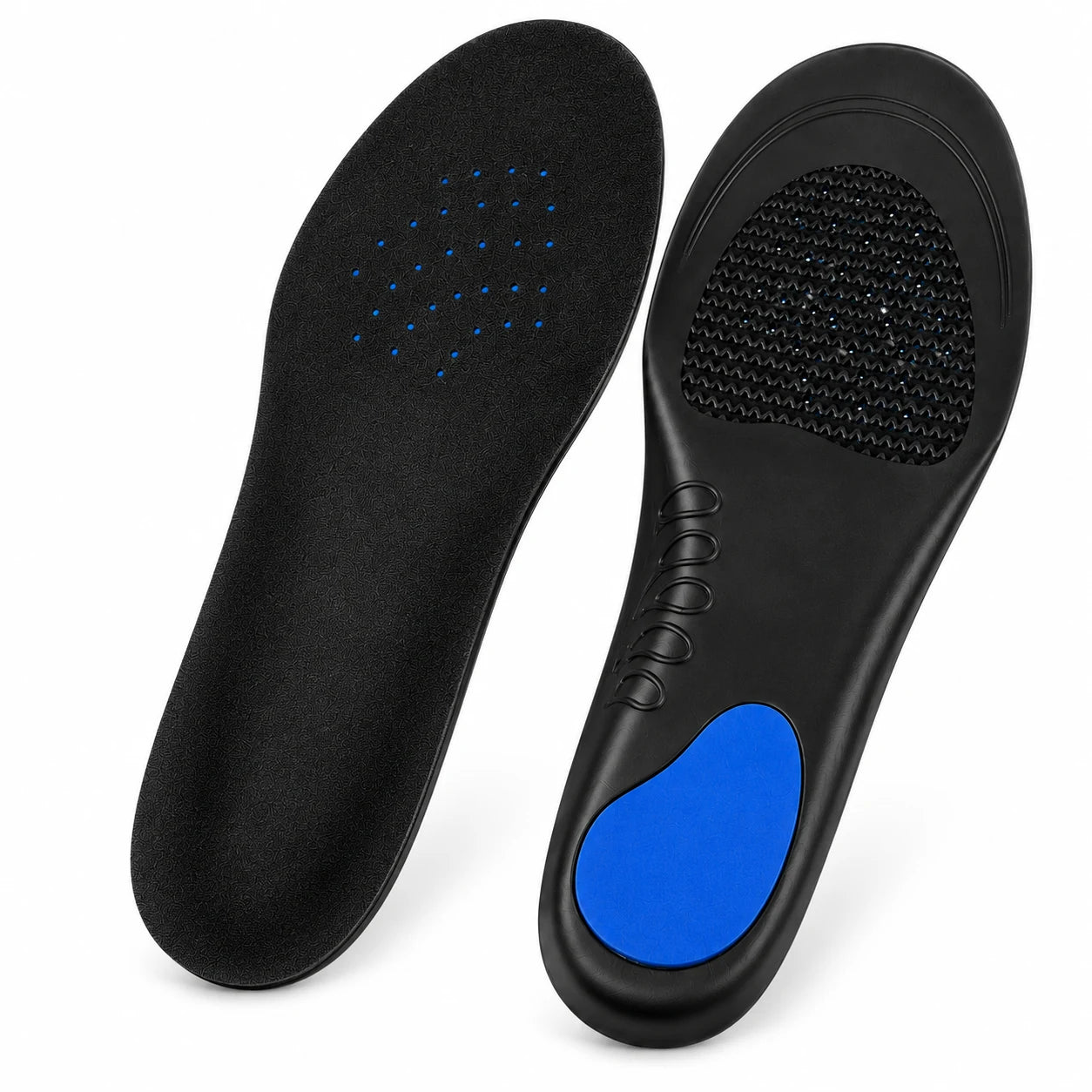
Ventilated Comfort Insoles
An option to inspect if forefoot openings and a separate heel insert are on your checklist.
- Visible openings beneath the forefoot
- Distinct blue heel cushion
Keep in mind: an open pattern alone does not prove reduced sweating.
See the product detailsCheck the fit before committing to your workday.
Compare the insole with the shoes and socks you actually wear at work. If your footwear has a removable footbed, take it out to inspect its outline and thickness. Check the new model’s instructions before deciding whether to replace that footbed. Do not automatically stack two insoles inside a shoe that already fits closely.
Lay the outlines side by side and compare the heel, forefoot width and length. A picture alone cannot confirm fit. Ask for dimensions if they are missing. Trim a model only when its instructions permit it, using the original footbed as a reference rather than cutting from the shoe-size label alone.
Fasten your shoes normally when trying the combination. Your toes should still have room and the heel should remain secure. Walk briefly and notice any new pressure points. If the arch shape feels intrusive or the shoe becomes cramped, reconsider the combination rather than forcing an adjustment period.
For safety-toe work boots or other protective footwear, check the manufacturer’s instructions and your workplace requirements before replacing an internal component. A comfort insole does not add a protective certification on its own. We do not present the models in this guide as certified personal protective equipment.
Podolis lists these models using the supplied EU size ranges. Do not assume that a familiar US shoe size converts exactly to one of those ranges. Check the product’s available options and ask for measurements when needed. This is especially useful if you wear different sizes across sneakers and work boots.
What insoles cannot change about your shift.
An insole cannot fix a shoe that is too narrow, worn-out footwear or a poorly arranged workstation. Where the job permits it, changing positions and using opportunities to sit or move are among the approaches described by CCOHS. Discuss practical workstation changes with your employer or occupational health team.
If pain persists, gets worse or interferes with normal work, seek professional advice rather than cycling through inserts. Comfort insoles do not replace a diagnosis or prescribed care. Custom orthotics involve a different process based on an individual assessment; the models shown here are not presented as substitutes for that process.
Questions to ask before you order
Are gel or foam insoles better for standing all day?
The material name alone is not enough. Compare the construction, cushioning layout, arch profile and thickness too. Two products labeled gel can have very different shapes. Start with your footwear and the model’s actual details rather than assuming one material suits every shift.
Should I remove the original insole?
It depends on the shoe and the new model’s instructions. Avoid automatically stacking footbeds because this reduces available space. If the original is fixed in place or the footwear has safety requirements, check the manufacturer’s guidance before making changes.
How do I choose a size when the selector shows EU ranges?
Use the ranges listed on the product page and check dimensions where available. Do not substitute a guessed US conversion. Ask us for the missing measurements before ordering if you are between options or unsure about the fit.
Can these replace prescribed orthotics?
No. This guide compares comfort products. If you use prescribed orthotics or have persistent pain, ask your treating professional which products or footwear changes are appropriate for you.
Now compare the shapes that fit your checklist.
Browse the work-insole selection, then open a product page to check its images, EU sizes and construction details.
Compare insoles for standing at workStill unsure? Try the three-question guideSources and approach
Prepared by Podolis using its product descriptions and CCOHS prevention guidance accessed October 28, 2026. These sources do not endorse our products. We do not present clinical testing of the featured models.